Our Story
Platte County, Nebraska tree removal, done right.
Rooted in the Platte Valley
Columbus sits where the Loup River runs into the Platte, at the crossing of US-30 and US-81, with the Union Pacific main line through the middle of town. Around it lies flat to gently rolling irrigated corn and soybean ground, a center pivot on every quarter and a shelterbelt on the north side of nearly every farmstead.
The trees here are cottonwoods along both rivers, green ash dying since the emerald ash borer was confirmed in Columbus in August 2021, hackberry, bur oak and honeylocust on older streets, and silver maple and Siberian elm planted in the 1950s and splitting now. Add a few American elms, black walnut in the bottoms, shelterbelt redcedar and pine lost to pine wilt, and front-yard Colorado spruce.
The sandy loam grinds easily but lets a root plate rock loose in a wet spring. Knowing how each of those trees fails, and which ones stand on the boulevard between the sidewalk and the curb, is where every estimate starts.
Four Services
Tree removal, stump grinding, trimming and land clearing make up the whole list. Mowing, bed mulch, landscaping and commercial contracts stay off it, so the crew stays with the homeowners and farm families who call. If your job falls outside the four, we will point you elsewhere.
How It Works
Platte Valley Tree Co. exists so Platte County homeowners can get an honest read on a tree and a written price from a careful local crew. After storms the usual options are poor: a big outfit rolling in on US-30 that quotes high and leaves the brush, or a pickup-and-chainsaw crew with no insurance and no city registration.
How it works: you send the form, and we ask the questions that show whether the tree is a boulevard tree needing a Public Works permit. Then a local tree crew walks the property, rigs a backyard maple as carefully as a limb in a service drop, and you get a written price before anything is booked.
Cottonwood, silver maple, Siberian elm, bur oak, spruce, windbreak cedar and dead ash each fail their own way, and sandy loam changes how roots hold after a wet May. We check root flare to crown first, and we know which trees sit on the boulevard.
Rigging is never skipped to save an hour. The property gets walked before a plan is set, and when a trunk must drop onto the street, the city's 24-hour notice is filed and the cones go out.
The estimate is written before work begins. A borer-killed ash over the driveway gets called what it is, and so does a bur oak that has leaned toward the pasture for decades and is perfectly fine.
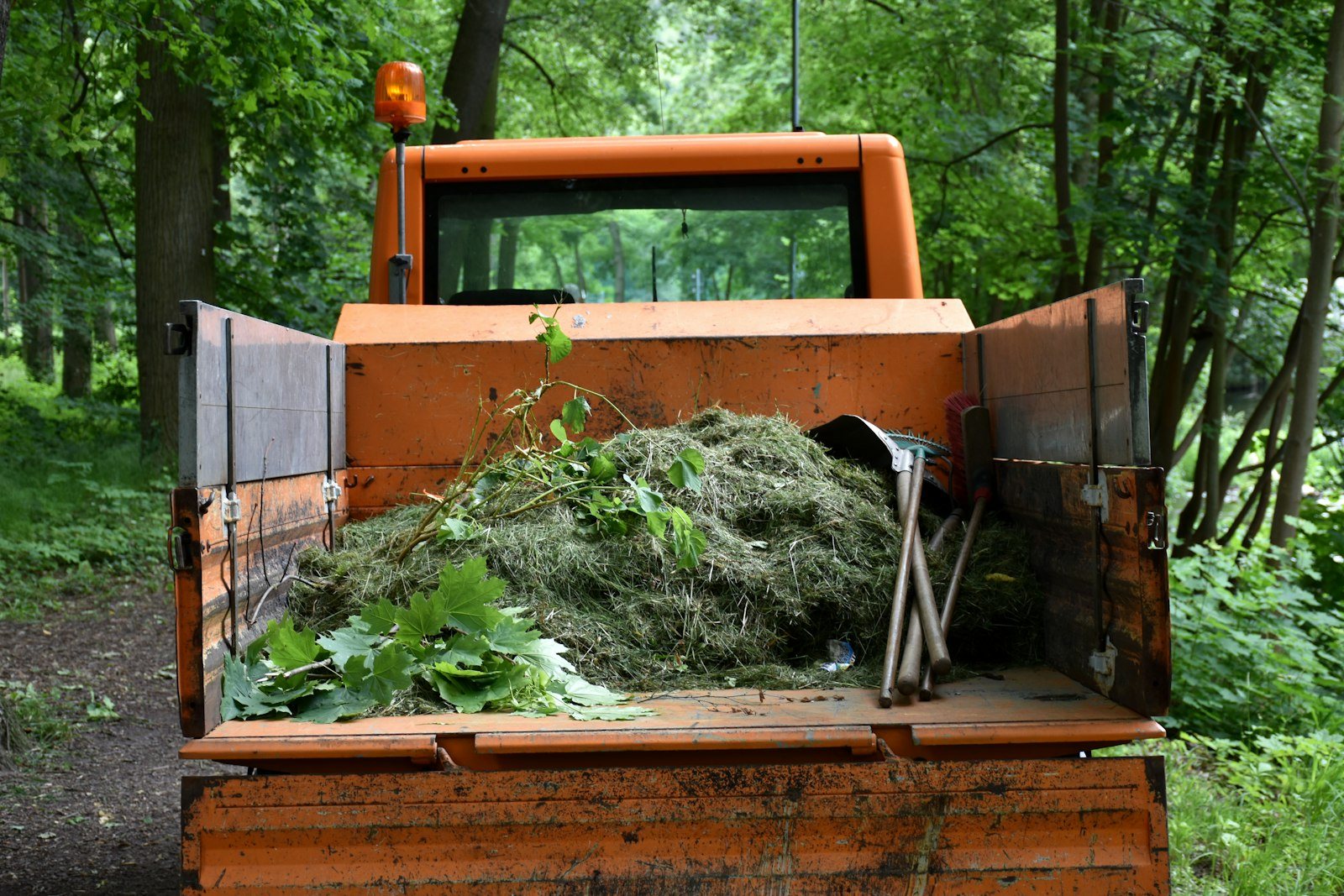
We finish when the wood, brush and chips are gone and the yard looks as it did, minus the tree. Burning is banned inside Columbus and needs a fire district permit outside it, so everything leaves on our truck.
Type a Platte County town or a ZIP code to check our coverage.